L3 CREATIVE MEDIA


shot types
establishing shot-
Establishes the Character and their surrounding environment.
close up-
Used to show the expression on a characters face,
helping to emphasise the the mood of the scene.
extreme close up-
Extreme close ups are used in order to show that an item or character is important to the plot.
Mid shot-
Used during scenes of dialogue between 2 or more
characters since it gives you a view of their face, body language and partial view of the background.
over shoulder-
Used typically during scenes of
dialogue, conveying a back and forth between characters.
two shot-
Used to show the reaction of a pair of characters,
typically seen during action or tension.
wide shot-
Used in order to fit a characters full stature
within the frame.
high angle-
Makes subject seem weaker, smaller and
more submissive.
low angle-
Makes subject seem larger, more imposing
or threatening.
canted angle-
Conveys a sense of unease, disorientation and confusion.


Colour connotations
The way colours are used and interpreted can change a lot about a piece of media. Colours can be used in a film to highlight something of importance, set the mood or tone, and elicit certain emotions from the audience. How colours are interpreted depends on a persons age, background, culture and life experiences, so no persons reading will be exactly the same as another's.
Despite this, there are many commonly excepted connotations for certain colours, for example:
Red:
Can represent love, passion, heat, anger, rage, lust, blood, fear, danger, warnings, desire etc. Red has a lot of crossover between Romantic and Horror films - two entirely opposite genres. Romantic films typically use a lighter red whereas Horror films use a darker one.
orange:
Can represent warmth, optimism, confidence, enthusiasm, arrogance, agreeableness and superficiality. orange is used a lot in movies or scenes that are warm, soft and friendly as it's closely associated with beginnings, calmness and human connection.
Yellow:
Can represent happiness, sunshine, childlike fun, nostalgia, hope and cowardice. seen a lot in comedies, yellow is a light-hearted, carefree kind of colour with few negative connotations.
green:
Can represent Jealousy, greed, covetousness, sickness, envy, growth, nature and fertility. Green is used in a lot of "adventure" films due to it's feeling of growth and new beginnings, but is also used to represent darker themes for its more negative meanings.
blue:
Can represent Calm, peace, the ocean or sky, freedom, isolation, cold and melancholy. Blue is often used to make a character pop from the background as it stands out against most skin/hair types.
Purple:
Can represent evil, fantasy, ethereal, ominous, wealth, royalty, importance and rarity. In media and film, purple has long been used to illustrate the more illustrious and fancy things in life.

This scene in vertigo is of great significance to the ret of the movie, as this is where scotty meets the fake Madeline. She will ultimately be his downfall, represented by the intense amount of red coating the restaurant which serves as a warning. She herself is dressed in green, which later in the movie represents Scotty's sickness and obsession with her.

Fantastic Mr Fox is an incredibly orange film in general. It has this very warm, comforting and nostalgic tone to it, which I think is well conveyed here.

Yellow in The Royal Tenenbaums consistently represents the truth, reality and emotion. This holds true with the tent scene pictured here, as its here where the siblings speak truth to each other. The yellow also gives it this childish-nostalgia feeling, as it's two siblings in a kids play tent in their old home.

Green is used throughout Whiplash to represent Andrews discomfort and inner conflict, clearly shown through this scene where he attacks Fletcher after being hit by a car and still showing up for the performance. Yellow is also used in whiplash heavily, the two colours often in opposition.


The opening scene of City of God is blue and cold looking to represent the harshness and reality of living in the slums of Brazil. This scene is soon contrasted by a flashback from the past, which is very yellow and warm toned.


Gene Wilder's Willy Wonka is dressed in purple, since he has this air of mystery and magic to him. Considering the usual connotation of purple being something precious or rare, this seems to suggest that Wonka himself is this rare abnormality. Purple also just adds to his uniqueness as nobody else in the film wears purple as flamboyantly as him.
Scream
Micro-ananlysis

Drew Barrymore, playing Casey Becker, is dressed in an almost full white outfit, with white pants and an off-white top. This could be to represent her innocence and purity.
Later on, her outfit is stained red with blood, symbolically showing the loss of her innocence.


Wes Craven also utilised canted angles to set a sense of unease and fear into the audience, both while people are on the phone. The audience is uneasy not knowing who's on the phone, and the angle serves to enhance this effect.


The cuts back to her popcorn on the stove builds tension for the audience, as well as fear due to the very real implication of her house burring down as a result of the unattended food.


Shaky and frantic camera movements are used while Casey locks all the doors. this helps the audience get into her shoes and feel the panic she'd be feeling.


Wes Craven creates a claustrophobic atmosphere by using slow zooms toward Casey while the killer is speaking, or as a response to something he's said. These camera movements are used most after the killer has revealed he is in, or around, her home. This is to help emphasise how Casey likely feels trapped and has nowhere to run.
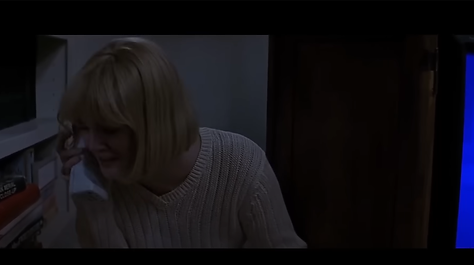
S.W.A.T analysis
SYmbolic
-Wearing all white, symbolic of innocence. Also reminiscent of a lamb - sacrifice.
-playing with a knife, playing with danger.
-popcorn, resembles the escalating situation with Casey and the killer.
audio
-Dialogue between Casey and killer on the phone.
written
-text
technical
-Shaky camera, voyeuristic angles.
-Close-ups, claustrophobic feeling.
-Canted angles, unease
conjuring 2
S.W.A.T analysis
SYmbolic
- The connotations and the secondary meanings on screen.
written
- Any text
-Candles and people sat around a table, resembles a séance
-Dark against light - good vs evil
-Red, signifies danger
-Religious iconography -red candles, Jesus, cross
-cobwebs - signifies passage of time
-Children are wearing pyjamas, may have died in the sleep/at night
-Nun with a cross. Crucifixes ward off evil, juxtaposed by the nun who looks evil.
-more chairs than normal, home may have been a school or orphanage at some point
audio
- Any audio/lack of
-Low rumbling, high-pitched strings create tension
- Dissonant music, inflicts fear on the audience.
- Heavy breathing
-choking noises, as well as gasps
-reverb on everyone's voices, kids laughing-synonymous with horror
-Guy's voice is muffled, cant hear clearly, signifies another plane of consciousness.
-weird, whining , unpleasant music with little to no rhythm or pace.
-pleonastic door creaking - old house
-Rumbling gets more intense longer she's there
technical
- Anything done in the production, camera angles etc.
-Voyeuristic camera movements, feels like she's being watched.
-zooms, claustrophobia
-rapid handheld camera movements
-zooms into the mirror slowly, gets close enough subtly to jumpscare.
-camera moves backward with Loraine as she's chocked.
-camera moves like an animal moving toward her, reminiscent of the evil dead franchise.
-pov shot
-Canted angles, unease