


Internet history
In the 50s, during the midst of the cold war, the USA was paranoid about the Russians breaking or dismantling their communications systems. they needed something where if one party was disconnected, the main line of communication would remain accessible for all the others - a network of some kind. This led to the creation of the ARPANET - the precursor to the internet. By 1969, the first message was sent to another site using the software, and by 1973, 30 institutions had joined the network, including ones in the UK and Norway.

map of Arpanet connections, 1977

Apple 1 personal computer, 1976
Before everyone and their mum was online, the internet was used primarily among academics and aforementioned institutions to share files. The introduction of email with Eudora in 1988 caused one of the first explosions of activity online, though the actual web wasn't very user friendly or accessible to the public. the internet was first introduced to the public/non-academics through NCSA Mosaic in 1993, one of the first widely available browsers. When people realised they could easily code their own sites using HTML, the number of websites went from 130 in 1993 to over 100,000 by the start of 1996. Early sites didn't follow design principles - since they didn't exist for websites yet. The world wide web was new, allowing people to be as creative as they wanted - resulting in sites like these.


Once browsers made the internet intuitive and simple to navigate, there was an huge influx of people coming online, making their own sites, going on forums and having discussions. Early sites like 4chan, something awful forums and Newgrounds fostered community, allowing for the notorious "meme" to emerge. Memes are an idea that is repeated and parodied over time. On the internet, memes can be images, videos, text or songs that people will re-create and parody for a variable amount of time.
examples of viral jokes or "memes" from around this time includes rage comics, pepe the frog, top text bottom text - specifically lol cats or "one does not simply" - and the rick roll.





Through the 2010s, internet culture, along with memes, began to evolve. the emergence of social media in the late 2000s and early 2010s allowed people to have more centralised community where they could share content with each other. social media giants such as twitter (2006), Instagram (2010), YouTube (2006), vine (2012) and others were making waves by uniting people under one platform instead of everyone having their own custom website. This meant that more people would see the same "popular thing" at a similar time and could make reference to it in real life. this is where we start to see the internet have more of an impact of peoples' social lives.
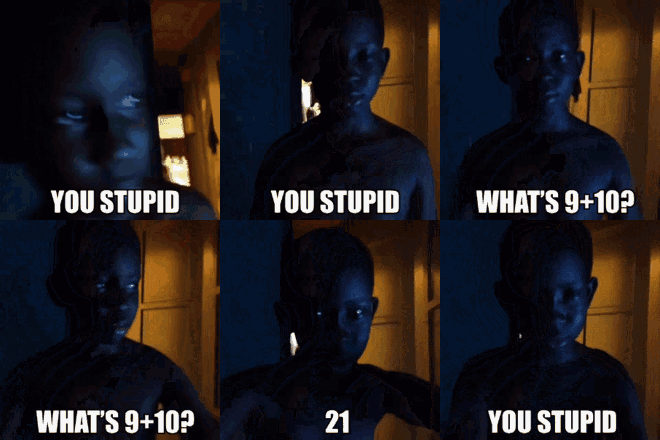
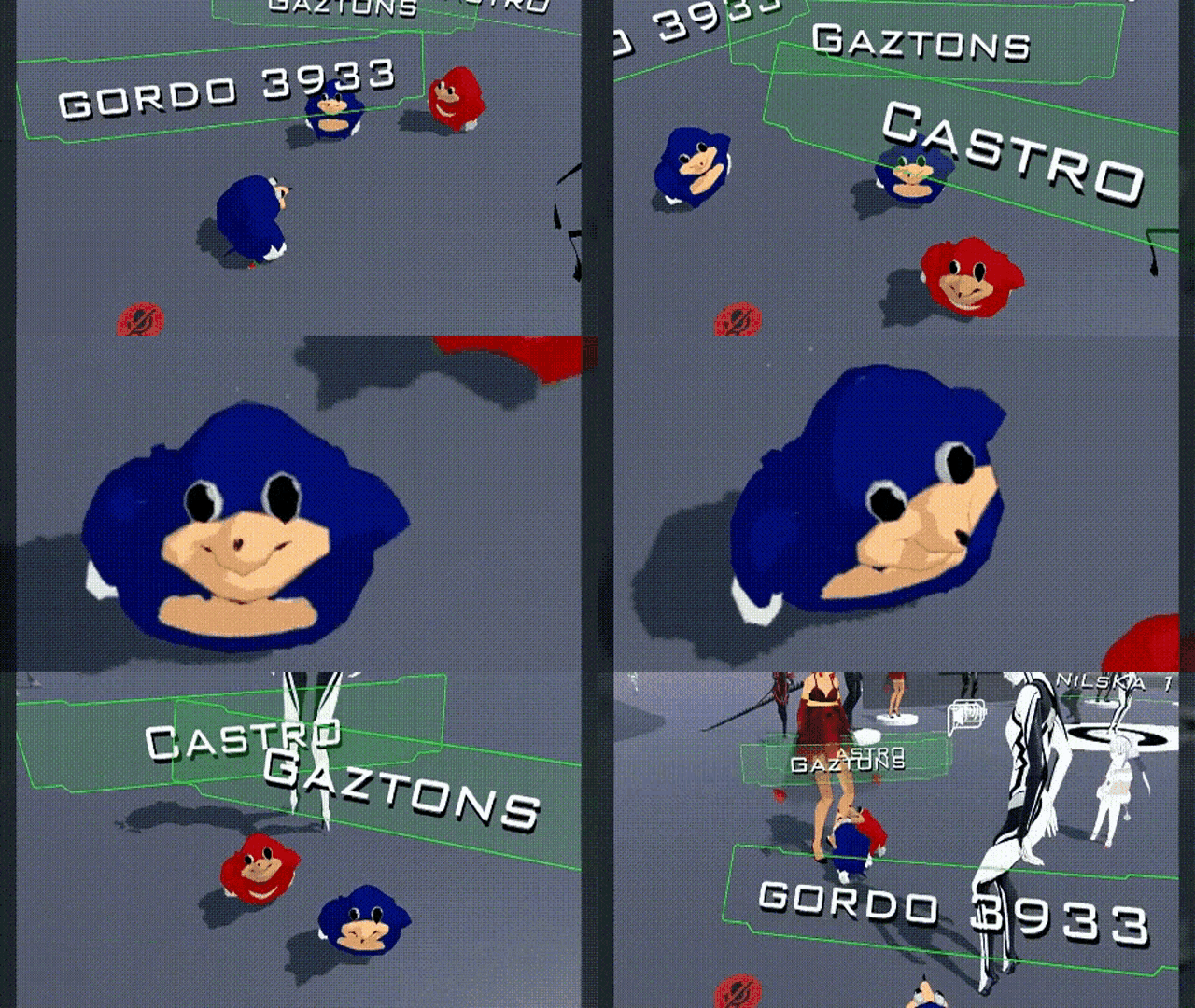
popular trends included "Dabbing", bottle flips and fidget spinners, popular videos and memes include "9+10=21", fre sh a voca do, deez nuts, here comes dat boy and many more. I can guarantee anyone that was a child around this time can recite a fair few of these confidently.









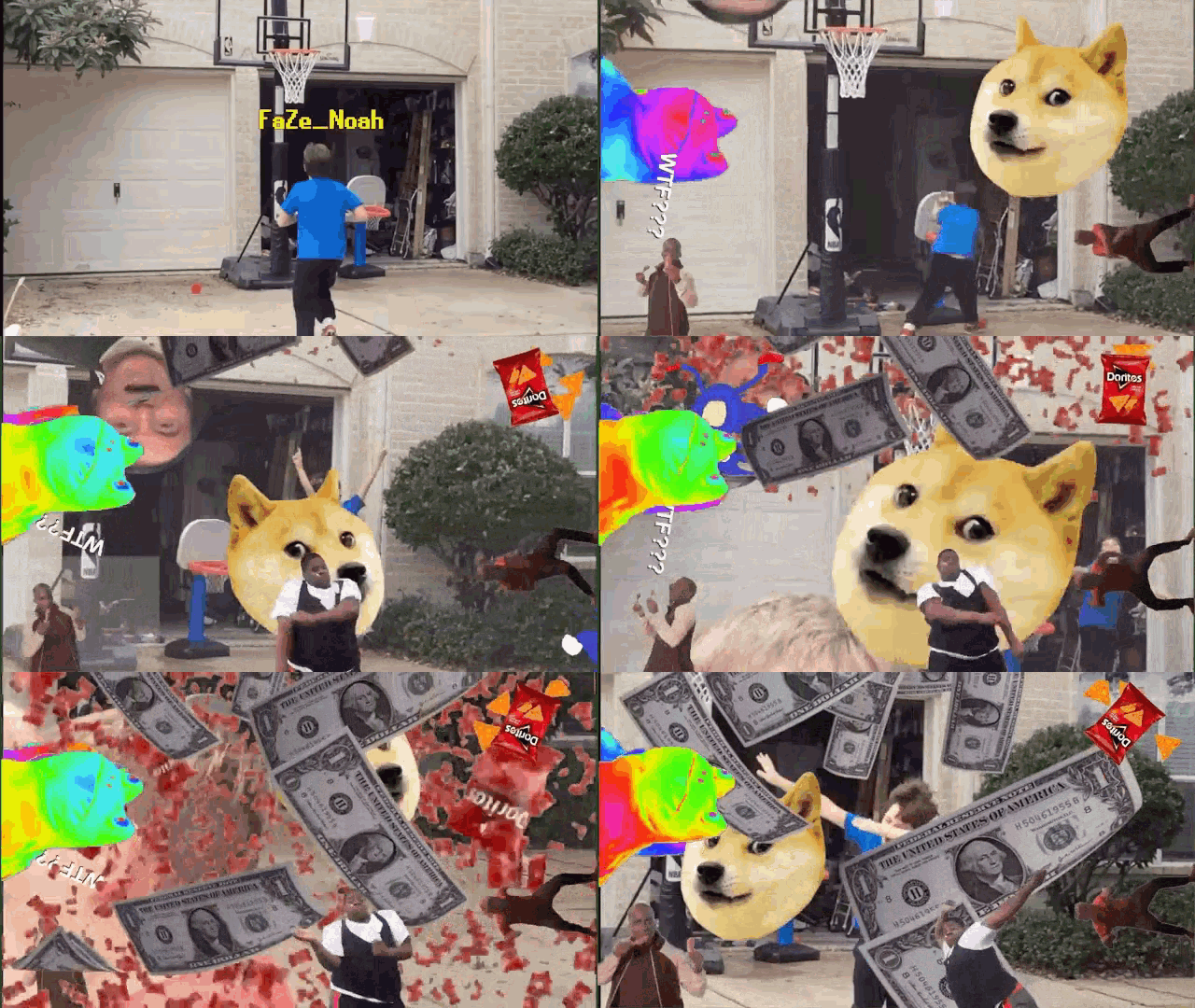





Thanks to YouTube's growing popularity, We also start to see the rise of influential public figures like Ray William Jonson, Markiplier, Pewdiepie, Jacksepticeye, DanTDM, Dan and Phil, Smosh, Filthy Frank, iDubbbz and many, many more. as more and more children consume this kind of content, the more Kids start to see Youtuber as their future career - highlighting how internet culture and influencers have made a significant impact on the real lives of these children.

Survey done by Lego, 2022
Online games and interactive content was also a large draw to the internet around this time. Sites like Newgrounds, Coolmathsgames and friv hosted free to play flash games, making it very easy for kids to find this kind of content and play without having to ask their parents to buy it first.


A large majority of the games hosted around this time were made with Macromedia flash, a software that allowed users to create and animate games and videos with relative ease. Even YouTube used Flash to host videos on its site when it first started. You could even contribute success for sites like Newgrounds to flash, since flash animations and games are primarily what the site is known for. Basically, flash was everywhere, and we loved it.
Unfortunately, Flash was discontinued in 2020 due to security concerns. This meant a lot of games were completely lost and are now unplayable without some kind of emulator.
The loss of flash really demonstrated why it's important to preserve and save content on the internet before it's lost forever. Flash was a key part of many peoples' childhoods, mine included, and not being able to play some of those games ever again was a significant loss.
Obviously, there were large efforts to archive as many flash games as possible before its discontinuation on the 31 December - not too dissimilar to the aim of the Web Preservation Society.
link rot & longevity of the web
Link rot is when hyperlinks (like this) stop directing you correctly after a while. This includes links to documents on government sites and Wikipedia references. This is important information, that without makes it a lot harder to discern what is trustworthy and what isn't online.
Pew Research centre gathered data that showed 38% of webpages that existed in 2013 are no longer accessible only a decade later. when most people think about web preservation, they immediately think of the OLD old internet, when dial-up was still around and everyone had their own site - but this isn't the case. Even more recent content is being lost, to this day hyperlinks are going dead and digital footprints are disappearing.
They also found that 23% of news sites and 21% of government sites contained broken links, just over half of all Wikipedia pages contain a reference link that does not work, and 1 in 5 tweets disappear or become inaccessible just months after being published.


This study combined with recent events, like the shut down of flash, illustrate why there is a need for internet preservation.
growing up online in the 2010s meant you were exposed to a wide variety of media, not all of which is currently available. Vine shut down in 2017, flash shut down in 2020, the next widescale loss of content could definitely happen in the near future.