Editing Techniques
in music videos
Cut on beat
Most songs have a 4/4 time signature, meaning that all the notes 1 bar of the song must add up to 4 quarter notes. when editing clips together for a music video, its important to cut every 8 or 4 beats to give it a nice rhythm. If the cuts are off beat or random it will look janky and weird.
Titles & graphics
Refers to the credits, artist or song name that appear as text on screen. If you wanted to add text to your music video, you might want to do it in a fun or creative way. The font must also conform to the genre or theme of the song/video.
colour grading
changing/adjusting colours so they look more vibrant, duller etc. colour can change the whole feel and meaning of a video or song.
Speed Alteration
This refers to the slowing down and speeding up of clips. slow motion is good for very dramatic and intense scenes, likely at the peak of the song. speeding up clips id often used during a lot of action and fast cuts to make it seem as if there's more going on.
lip sync
This is when artists appear to be singing their pre recorded song in a music video in order to imitate a live performance.
Split screen
Superimposition
When a band wants to show off all of its members at once, a collaborator appearing or to show two separate narratives, they often use split screen.
This is when you layer two clips over one another and lower the opacity of the top layer. done to seem dramatic and larger than life.
Chroma key
Green screen. this is useful in both high and low budget productions as it makes someone appear to be somewhere they aren't.
Examples:
Cut on beat
Tribute by Tenacious D
Titles & graphics
I am not okay (I promise) by My Chemical Romance
colour grading
Basket case by Green Day
Superimposition
Banana Republic by The Boomtown Rats
Speed Alteration
21 guns by Green Day
LIP SYNCING
Threw it on the ground by The Lonely Island
Chroma key
Common people by Pulp
Split screen
Scatman by Scatman John
Green screen
United states of whatever by Liam Lynch
Powdered milk man by The Aquabats
Green screen, or chroma key, is a popular feature of music videos. they're used for both high and low budget productions with varying degrees of quality. They're popular likely due to their ability to transport you literally anywhere - places that would be virtually impossible with practical effects. Green screen also adds an interesting and captivating element to the video in order to engage an audience for longer.
Green screens are also very simple and quick to do. I worked in a group to chroma key our own videos. Daisy filmed me and Tegan in front of the green screen and we independently edited the backgrounds in premier pro. i added some explosions to mine to make it awesome.


Low VS hIGH budget
There are many different kinds of music label, but the main ones are Major labels, their subsidiaries and independent labels. major labels, like Universal music group, have a lot of artists signed and consequentially a lot of money to throw at them. These big names often have smaller labels that operate under them, for example, BMG Music Publishing is a subsidiary of Universal. Independent labels operate without the funding or means of distribution that larger labels possess. music videos can create profit for artists through promoting their album leading to sales, as well as featuring products as a payed advertisement and ad revenue from their video getting views.
If an independent artist made a music video and compared it to a music video that a label produced, it would look much lower quality since labels love to throw money at things in hopes it'll make them stick. This means independent or yet unsigned artists have to be more creative with their ideas in order to get their video to get traction.
The Mighty Mighty Bosstones were signed to a label in 1993. their Music video for where'd you go came out in 1992. Katy Perry was signed at the time her Hot and Cold music video came out. you can see that there's much more going on in Katy's video, because she had the funding to execute bigger ideas.

No specific dress code, no expensive set, very laidback like they're hanging out with friends - all the people in the video are in the band I'm assuming. there's limited fx and the camera quality is low. lip syncing and movements are slightly off, not on time, poorly produced - lower budget/not signed

set in a church, they were able to hire multiple background actors, choreography, costumes, lighting etc. they could afford all of this because of the label.
Music video styles
Animation
A music video that uses any kind of animation.
surrealist
Irrational, often bizarre visuals that seemingly have no reason or relation to the lyrics.
parody
A parody/spoof video. "Gump" by Weird Al Yankovic is a parody of "Lump" by The Presidents of the United states of America.
Narrative
A video with a story/ narrative throughout. In Get outta ma house by HENGE, they save a robot that wants to destroy all life. He gets to earth and they must stop him
pastiche
Pays homage to the artist, an event or movie. Material girl pays homage to Marilyn Monroe's role in Gentlemen Prefer Blondes. Material Girl - Maddona
commercial
Designed to increase revenue, often feature product placements.
illustrative
There is a clear link between the lyrics and visuals.
referencing
A topic in culture is referenced or alluded to.
Lyric
Lyrics appear on screen in time to the music.
Music videos can make money for artists in many different ways, including (but not limited to) sponsorships, Ad revenue, streaming royalties etc.
This music video contains product placements for brands like belaire, kandypens, bumbu, ciroc, fashion nova and D&G
As*Hole
Denis Leary

Denis Leary’s 1993 song “Asshole” is a satirical take on American selfishness and entitlement, with the music video reinforcing this through exaggerated and comedic performance. The video follows Leary as he moves through urban and suburban settings, acting out the obnoxious behaviors layed out in the lyrics. Rather than telling a structured story, it presents a series of comedic moments that match the song’s tone.
There's a large amount of close-ups and tracking shots, keeping Leary at the center as he interacts with people who react with frustration or apathy. Fast-paced editing with jump cuts keeps the energy high, while the handheld camera adds to the unpolished feel. Mise-en-scène plays a key role, Leary’s leather jacket, cigarette, and beer represents the careless persona he plays, and everyday locations like streets and diners ground it all in reality. Leary embodies the stereotype of an ignorant, self-serving American, with exaggerated body language and smug expressions illustrating his character. The video uses visual gags such as cutting in line, littering, general disregard for others, to demonstrate the song’s theme. There are no elaborate special effects, keeping the focus on Leary’s performance and the comedic impact.
As a comedy rock video, it follows genre conventions by using humor, irony, and satire rather than traditional storytelling. It is mostly performance-driven, with Leary singing directly to the camera while acting out the lyrics, making it feel like a mix between a music video and a comedy sketch. The video is meant to entertain but also provoke thought about the behaviors it mocks. It effectively enhances the song’s message through bold, unapologetic visuals, making the humor land harder. The combination of Leary’s over the top delivery, suburban setting, and fast editing makes it an effective music video.
centerfold
the j. geils band

J. Geils Band’s “Centerfold” (1981) is a playful, high-energy music video that complements the song’s theme of nostalgia and childhood crushes. The lyrics tell the story of a man discovering that his high school crush has become a model for a “girly magazine”. At first shocked, he quickly comes to realise that she's her own person and he is too, so he buys it.
The video is performance driven, with the band playing in a school setting while surrounded by cheerleaders, who dance and interact with the musicians. The camerawork features dynamic tracking shots and close-ups that capture the band's energy, along with quick cuts that match the upbeat tempo. Editing is fast-paced, though some moments use slow motion, particularly clips of the cheerleaders dancing with the singer, emphasizing the dream-like nature of the protagonist’s fantasy. Mise-en-scène leans into exaggerated high school imagery like lockers, desks, and cheerleader outfits, creating a setting that blends reality with fantasy. The band members themselves dress in flamboyant yet alternative clothes, contrasting with the polished, stylized cheerleaders and their school uniforms.
Symbolically, the video represents the clash between innocent teenage nostalgia and adult reality, with the protagonist struggling to reconcile his idealized image of his crush with her new, confident persona. The cheerleaders act as both literal dancers and symbolic figures of youthful desire, constantly surrounding and teasing the band. The slow-motion effect adds to this sense of longing, making certain moments feel even more exaggerated and surreal.
As a music video, “Centerfold” follows genre conventions by heavily featuring the band performing while incorporating a light narrative. Unlike darker or grungier rock videos of the era, this one leans into humor and self-awareness, making it more accessible. It’s clearly aimed at a broad audience, particularly young adults who can relate to themes of teenage crushes and shifting perceptions of the past. The video is highly effective in enhancing the song, turning its slightly melancholic lyrics into a fun, visually engaging experience. The mix of school nostalgia, high energy performances, slow motion dream sequences, and humor makes it a memorable piece of the 80s and a great music video.
Visible editing
techniques

slow motion/sped up
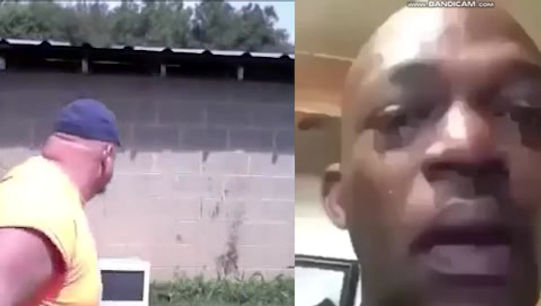
split screen

Freeze Frame

superimposition 1 (added film grain)

superimposition 2
(added fireworks)
I could use these techniques in my own music video to achieve a range of effects and moods. split screen could be used for a shot of two people in different places, superimposition could add all sorts of effects, from layering videos to adding grain and texture. a freeze frame can be used for suspense and slow motion for sad/intense/serious moments.